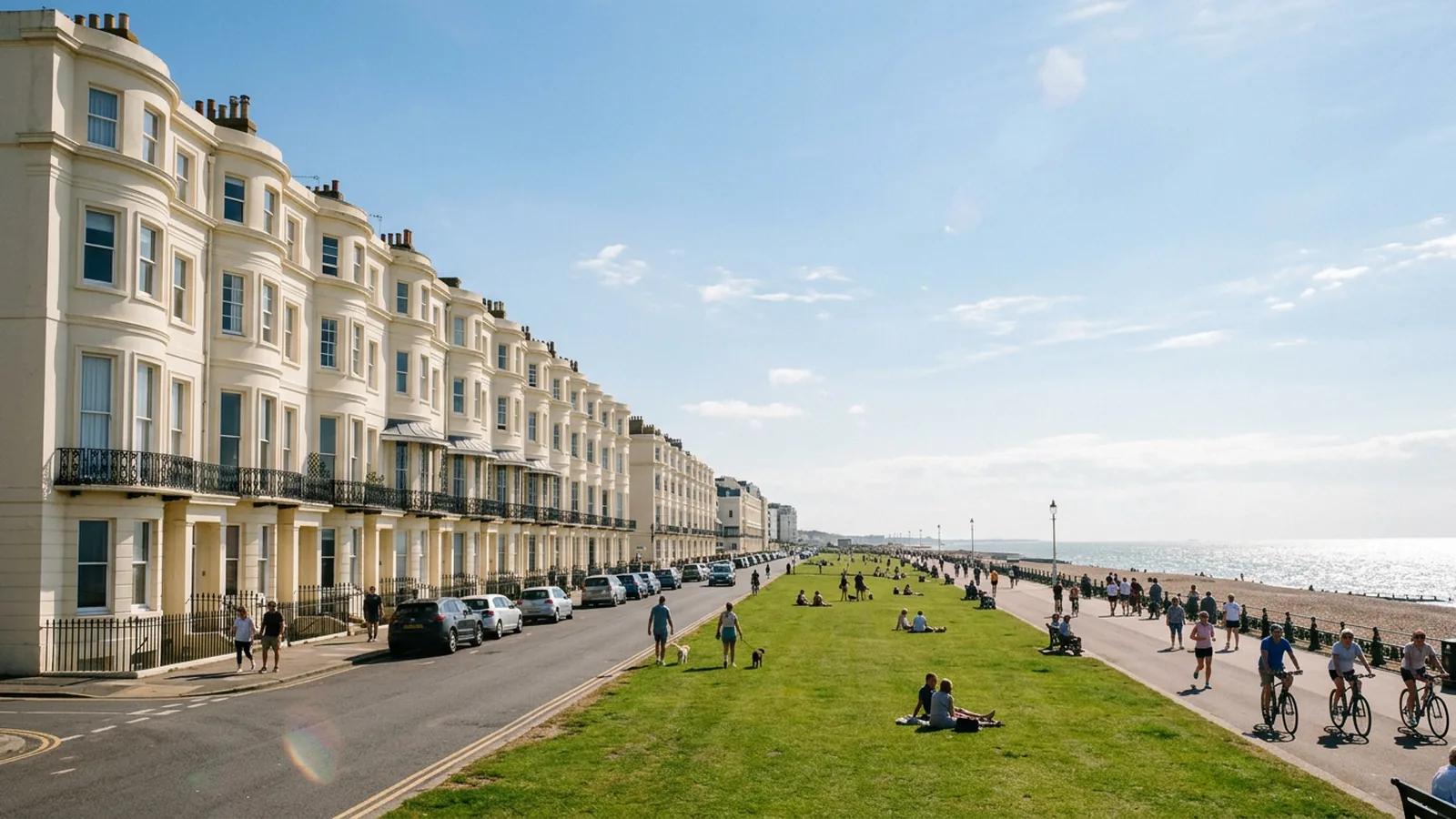
Windows worthy of Hove’s squares and avenues
Brunswick, Adelaide Crescent, the Avenues and Old Hove
Regency squares on the seafront, Victorian villas inland and Edwardian streets to the west, each with its own window.
Homes in Hove
Hove grew in clear stages. Brunswick Town came first: a planned Regency estate laid out by Charles Busby from the 1820s, with Brunswick Square and Brunswick Terrace on the seafront and Adelaide Crescent and Palmeira Square a little later to the west.
Inland, the Avenues were built through the 1870s and 1880s, many of them by the builder William Willett, as wide streets of large Victorian houses. His pale gault brick houses around All Saints Church form the Willett Estate. West again, Pembroke and Princes Avenues carry tile-hung late Victorian and Edwardian houses, and the old village core survives around Hove Street and St Andrew’s Church.
Planning at a glance
Brunswick Town was among the first conservation areas in the city, designated in 1969.
Flats need permission for any change in the look of their windows, wherever they are.
What usually suits these houses
Conservation area windows
Tall slim sashes for the Brunswick and Adelaide Crescent flats, with the paperwork that comes with them.
Sash windows
Box sashes and sash bays for the villas of the Avenues and the Willett Estate.
Slimline aluminium windows
Slim aluminium at the back, where the front has to stay traditional.
Every job is priced on its own: the figure depends on the sizes of your windows, how many there are and where they sit, the access, and the materials, colours and hardware you pick. A free home visit gives you the exact price for yours. Window prices in Brighton.
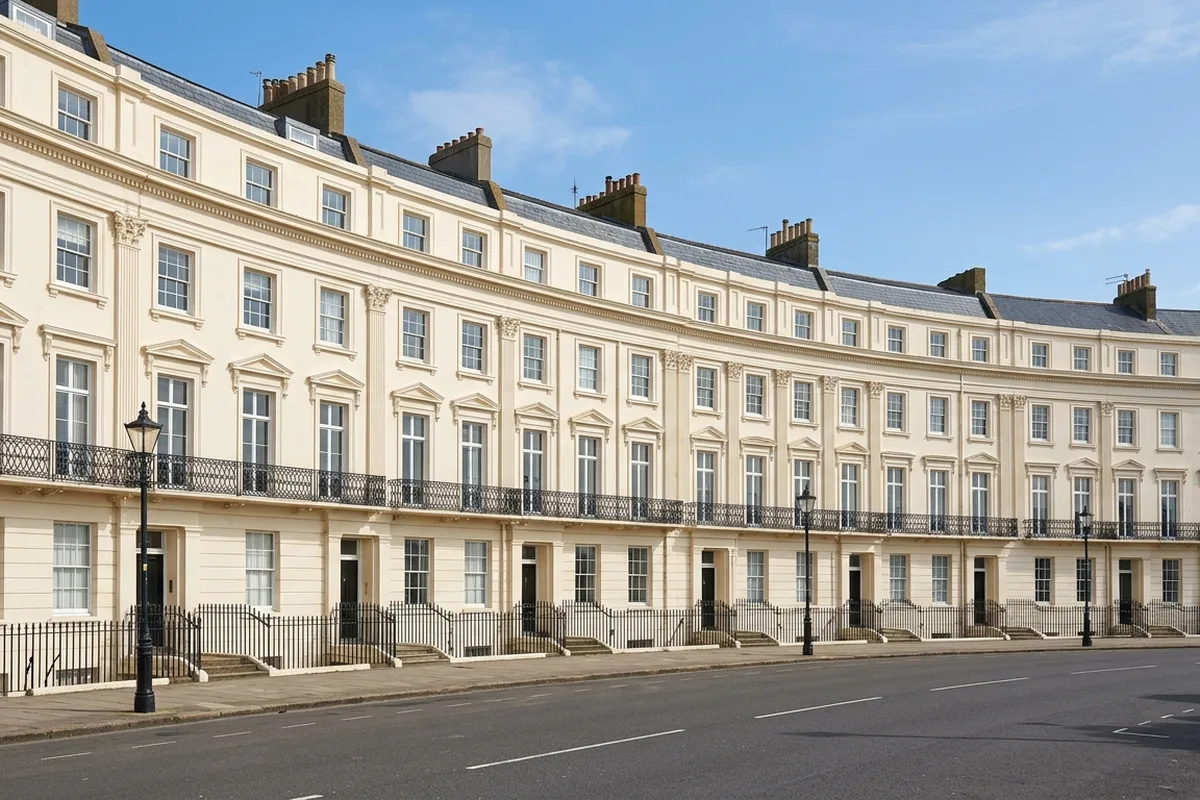
Conservation and permission
Brunswick Town was among the first conservation areas in the city, designated in 1969. The Avenues (1985), the Willett Estate (1989), Pembroke and Princes (1989), Hove Station (1996) and Old Hove (1997) followed. Article 4 directions cover Brunswick, Adelaide Crescent and Palmeira Square, Lansdowne Square, the Avenues with Cliftonville and The Drive, and Pembroke and Princes.
Many of the Regency houses are now flats, so the freeholder or managing agent usually has a say alongside the council. The Hove Civic Society follows planning in the town closely and is a good place to read about what has been allowed nearby.