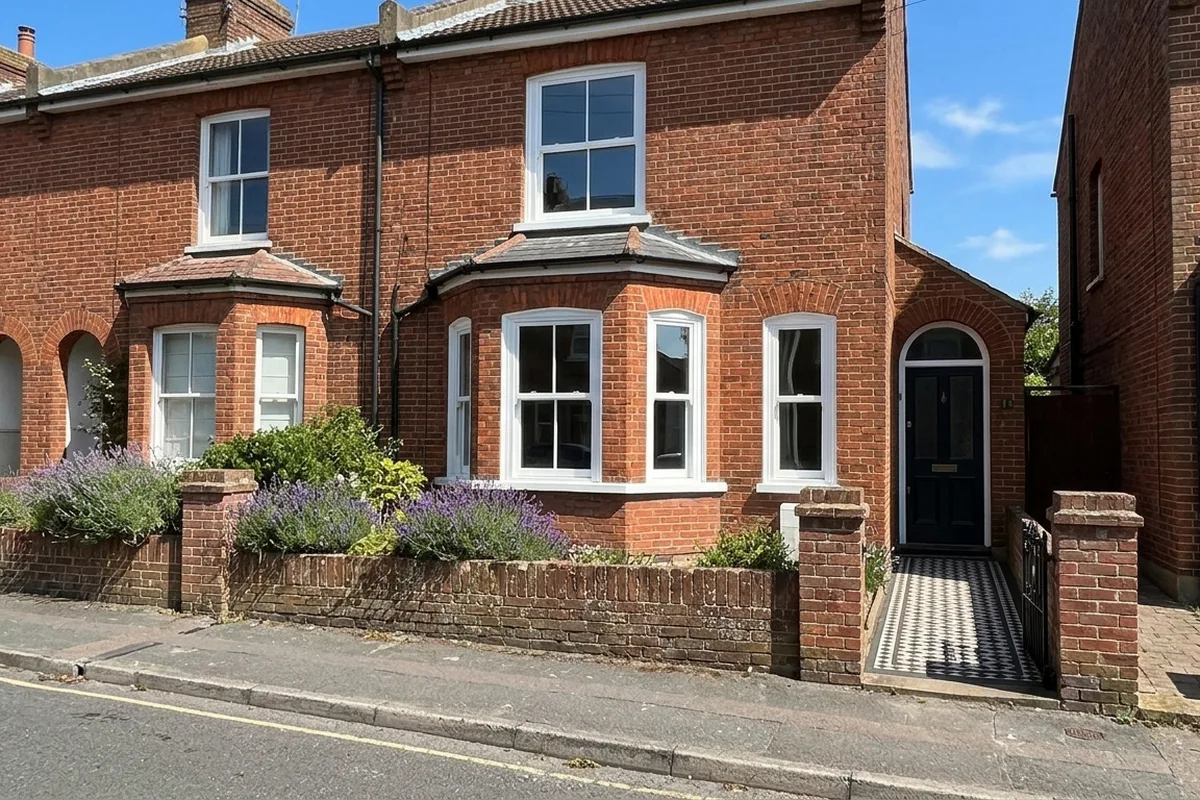
Sash windows that slide like new
Brighton, Hove, Kemp Town and Preston Park
Timber or heritage uPVC, with the panes, horns and meeting rails your street was built with.
The window the city was built with
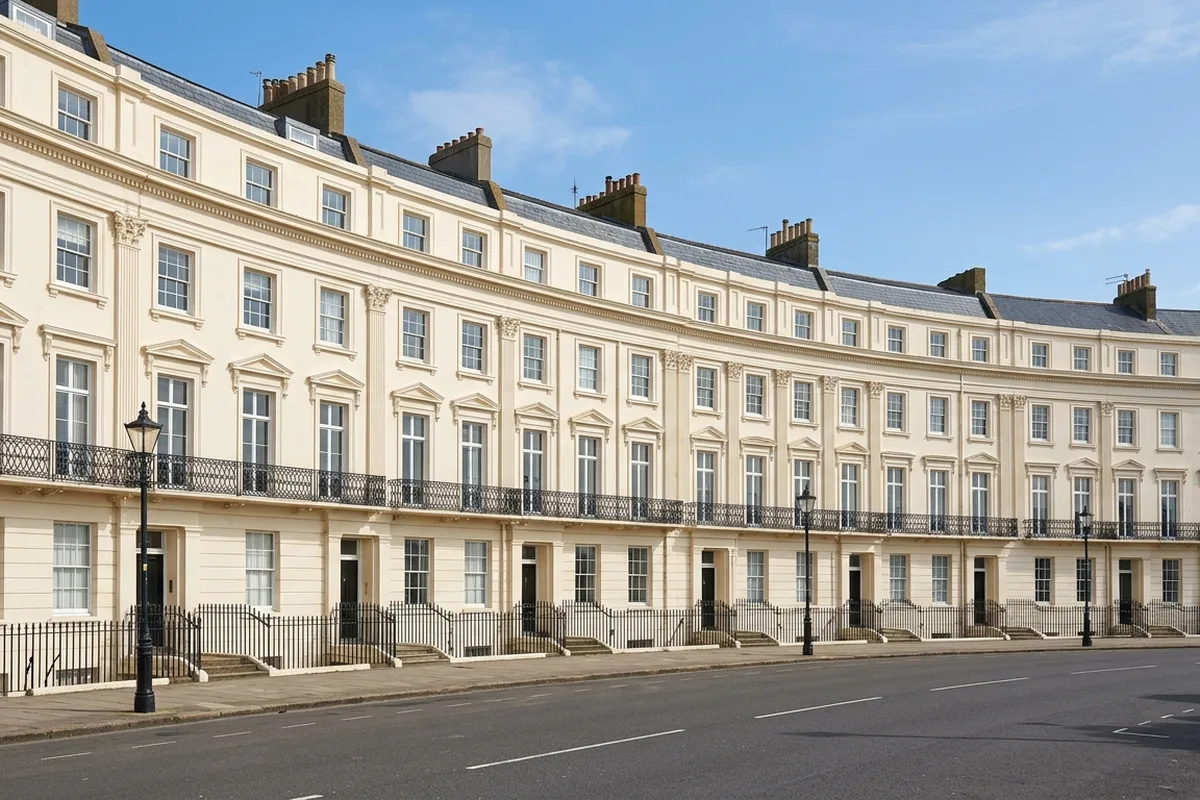
From the Regency terraces of Kemp Town and Brunswick to the brick villas around Preston Park, most of Brighton’s older houses were built with vertical sliding sashes. The proportions changed with the decades: tall six-over-six panes on the stucco fronts of the 1820s, two-over-two and then one-over-one on the Victorian streets, often in a canted bay.
Replacing a sash well means keeping those proportions. The meeting rail should sit where the old one did, the horns should match, and the glazing bars should be the same pattern as the houses either side.
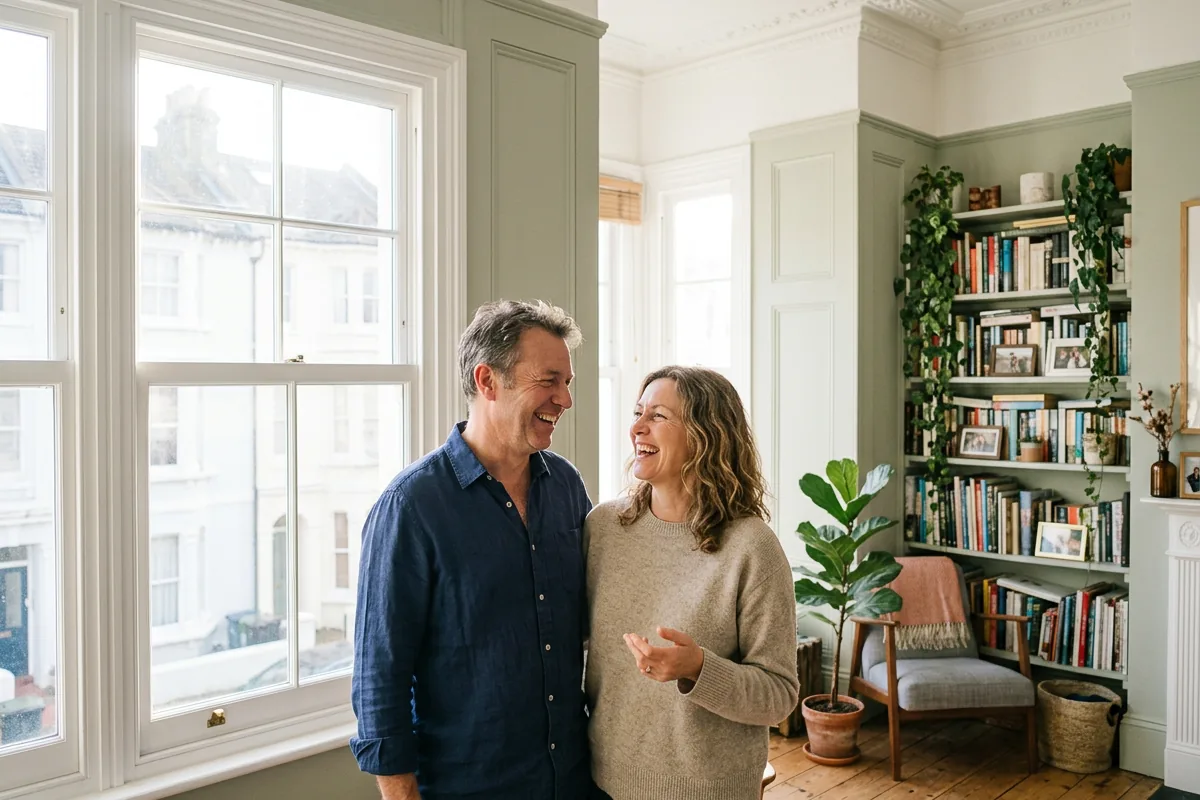
Timber box sash, or heritage uPVC sash
Timber box sash
Made from painted timber, hung on cords and weights in a box frame, with slim double-glazed units. It is the right answer for a listed building and often for an Article 4 street. A timber box sash is from £2,650 installed.
Painted timber needs its first repaint after about three years and regularly after that. That is the homeowner’s job, not the installer’s.
Heritage uPVC sash
A vertical slider in a woodgrain or painted-look finish, with run-through horns, a slim meeting rail and bars to match the street. It costs a little over half as much as timber and needs no painting, which is why most owners of unlisted houses outside Article 4 streets choose it.
The details that make a sash look right
Pane pattern
Six-over-six on most Regency fronts, two-over-two on many Victorian ones. A mismatched pattern is the first thing a neighbour notices.
Horns and meeting rail
Small details at the joint of the two sashes. Victorian sashes have horns; earlier Regency ones often do not.
Glass
Slim double-glazed units keep the bars thin. Some listed buildings need a different approach, agreed with the council.
Opening and cleaning
Both sashes slide, and many designs tilt in so the outside of an upstairs window can be cleaned from the room.
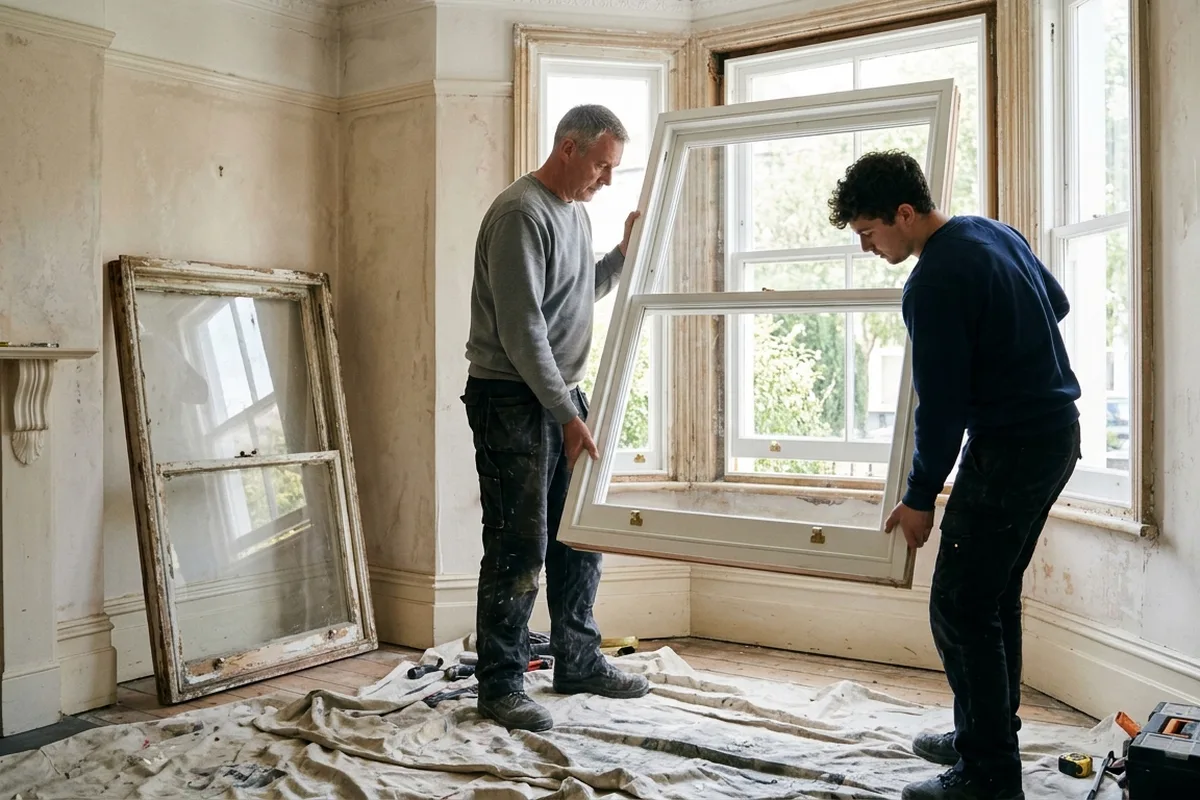
Most upstairs windows are fitted from a mobile tower, and where a tower is needed this may add around £150. Scaffold is kept for the buildings that genuinely need it, such as the upper floors of a tall Regency house.